Specialized microcement surfaces for your home
Microcement floors
Continuous troweled coatings provide durable, grout-free floor finishes that resist everyday domestic foot traffic across living rooms.
Microcement bathrooms
Waterproof seamless applications transform shower enclosures and vanity walls into hygienic, mold-resistant spaces without removing existing tiles.
Microcement kitchens
Stain-resistant mineral overlays create sleek splashbacks and seamless cooking zone floors that wipe clean with neutral soap.

The complete microcement process from preparation to sealing
Diamond grinding discs remove loose glaze, oil residue, and old waxes from the existing floor. A clean and rigid surface ensures the overlay bonds permanently without peeling.
Resin primer sinks into the floor while mesh bridges existing joints. This base stops old tile lines from showing through the finished top layer.
If you choose epoxy-reinforced microcement, resin blends are troweled across shower floors to build a waterproof base.
Fine mineral coats cure into a smooth, seamless floor without uneven trowel marks.
Two protective coats soak into the dry floor to block common household spills. They seal the cement tight against standing water and daily grime across every room.
Light foot traffic safely resumes forty-eight hours after applying the final coat. Furniture placement and direct water contact must wait seven days until sealers achieve complete chemical hardness.
Microcement raises property value with modern seamless surfaces
Completely seamless floors without grout lines
Smooth surfaces remove dirty tile seams across open living areas. Dirt and mop water cannot settle into grout lines. Floors stay clean with simple daily sweeping.
Waterproof surfaces in walk-in shower enclosures
If you choose epoxy-reinforced microcement, sealed coats stop standing water in walk-in showers. Water runs directly into the drain without soaking into walls or subfloors.
Thin overlay without trimming existing interior doors
A slim layer bonds straight onto current tiles. Interior doors swing freely over thresholds without trimming wood or tearing up old floors.
We cover Costa del Sol
Surface installations cover residential villas and commercial premises across the entire coastal region.
Epoxy base or standard polymer base for floors
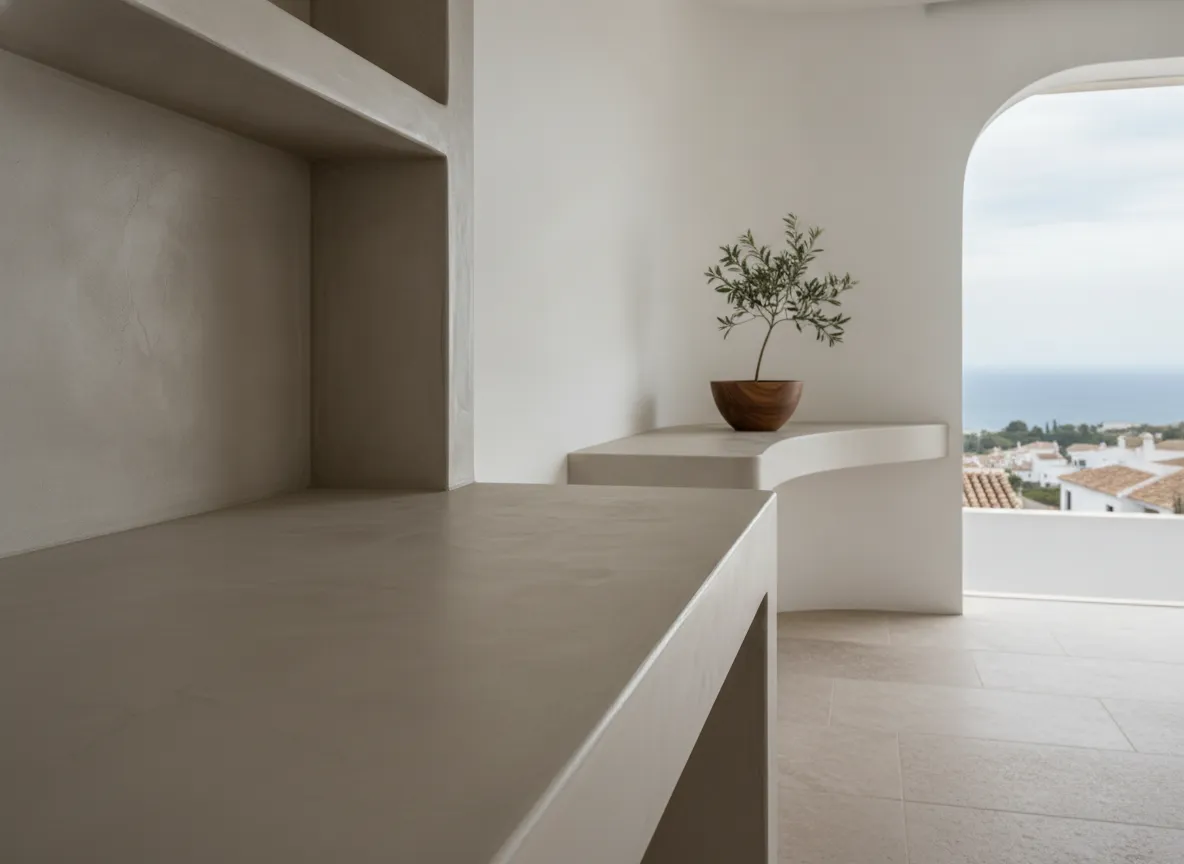
The room type and exposure to standing water determine which core formula belongs on the floor. Living rooms, bedrooms, and dry hallways perform reliably with standard polymer microcement. This traditional formulation blends liquid polymers with fine cement on site, curing into a hard, flexible surface that easily handles regular household foot traffic and furniture loads without unneeded additive costs.
Walk-in showers, wet room floors, and commercial wash areas face constant water pooling and chemical cleaners. Epoxy-reinforced microcement incorporates dense synthetic resins directly into the dry mix. This resin matrix creates an impervious base that prevents water penetration even before topcoats are applied, providing essential defense against saturation in vulnerable shower corners.
Matte protective sealer or satin topcoat sheen
The topcoat sheen changes the look of the room and shapes your daily cleaning routine. A matte protective sealer scatters light evenly across the entire floor. This finish creates an earthy look like plain stone or flat concrete. It conceals dust, dry footprints, and tiny marks in bright living spaces with sunny windows. The dull surface keeps a calm, quiet tone across wide open areas.
A satin protective sealer reflects gentle gleams of daylight and gives colors extra visual depth. The smoother coat forms a tight skin against spilled cooking oils, makeup, and soapy shower water. Grease and liquids stay on top of the smooth surface instead of sinking in. Active family kitchens and busy main bathrooms stay clean with a quick damp wipe.
Sunlit lounges gain an even texture from a matte finish that hides light dust. Busy kitchen floors and bathroom tiles benefit from the wipe-clean barrier of satin coatings.
Is this what you are looking at?
Dark mold in shower tile joints
Porous grout joints absorb standing water and harbor stubborn black mold behind shower fittings. The stained enclosure can be saved, as long as the tiles stay firmly bonded to the wall.
Cracked terracotta tiles on kitchen floors
Brittle clay tiles split under shifting structural foundations and everyday heavy foot traffic. The broken floor can be saved, as long as every loose tile is re-anchored.
Chipped paint along bathroom wall corners
Trapped shower steam softens old wall paint and loosens surrounding gypsum plaster. The soft plaster corners can be saved, as long as the masonry beneath remains solid and dry.
Stained porous concrete on living room floors
Unsealed concrete slabs absorb household oil spills and show permanent dark patches. The stained slab can be covered, as long as deep grease is ground away first.
White salt powder along floor edges
Ground moisture draws dissolved mineral salts through unsealed concrete and forms chalky efflorescence. The chalky floor can be coated, as long as a damp barrier stops rising ground water.
Your questions, answered
How long does a microcement installation last? +
A sealed surface lasts ten to fifteen years before major work is needed. Busy walking areas stay protected with a fresh clear seal every three to five years.
Can underfloor heating run beneath microcement? +
Microcement conducts heat efficiently and works well over warm floor systems. The heating must be switched off before work begins. It is turned back on slowly after the final sealer cures completely.
Can microcement be applied directly over old ceramic tiles? +
The mineral coat bonds directly over ceramic tiles when each tile sits tight. Primer and mesh bridge the seams so old joints stay hidden.
How do you clean microcement floors in coastal humidity? +
Cleaning needs only warm water and mild soap with a soft mop. Harsh bleach and strong acids wear down protective sealers over time on Costa del Sol.
How far in advance should microcement work be booked? +
Early booking secures project dates before busy renovation periods on Costa del Sol. Good timing allows steady drying periods between surface prep, coat spreading, and final curing.
What happens if the finished microcement surface shows defects? +
Uneven texture or light sealer marks come off with fine hand sanding and an extra seal coat. The dry finish is checked under natural light to ensure even color across the room.